For investors in an online brokerage world rife with exchange failures, data leaks and custodial opacity, capital security is now the paramount issue.
Kepler Group has made a point of addressing those very concerns, staking its reputation on an infrastructure built from the ground up with multi-layered Kepler Group security protocols, segregated custody and institutional-level Kepler Group encryption. This Kepler-Group.ai Review is an attempt to determine if the firm's architecture lives up to the billing.
The company is located in Nyon, Switzerland and caters to CFD and cryptocurrency traders via its proprietary web interface. By subjecting its operational processes to documented compliance protocols aligned with Swiss and broader European statutory expectations, the company maintains a governance baseline consistent with legitimate financial service providers.
The platform's value proposition rests on its Kepler Group capital protection framework. Client money is kept with Tier-1 European banks while 98 per cent of crypto holdings are put in offline vaults. An investor doing due diligence will want to get to grips with the technical details.
The Three-Tier Kepler Group Security Model
The approach to Kepler Group security is one of defence-in-depth, eschewing any single point of failure for an architecture where three separate layers, namely hardware isolation, algorithmic safeguards and capital segregation, work in harmony.
In terms of hardware, the bulk of digital cryptographic assets, 98 per cent in fact, are sequestered in Kepler Group cold storage. These are physical vaults with multi-signature protocol gates, entirely cut off from outside networks. It is the standard expected of a top European asset management operation and it leaves little room for would-be threat actors.
On the algorithmic side, the Kepler Group AI is constantly on the watch for imbalances in the global order book.
When risk parameters are violated, defensive overrides come into play as a matter of course. Acting much like circuit breakers, these volatility locks will put an end to exposed positions in the event of market turbulence, preventing losses from running beyond what is installed into the risk management protocols.
How Does Kepler Group Encryption Protect Client Data?
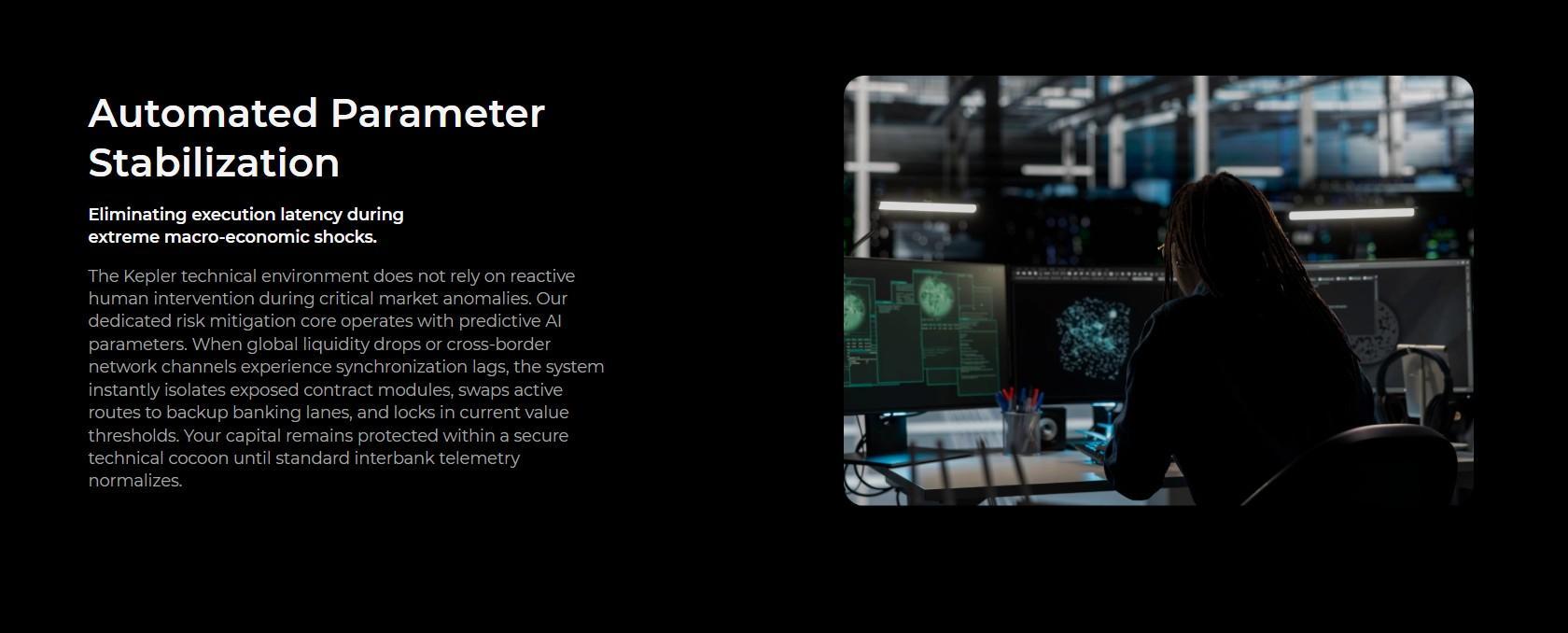
The platform applies the same level of protection to all data moving between client interfaces and core servers as is found in military or government communications. That means AES-256 institutional-grade Kepler Group encryption, which covers everything from personal details and account telemetry to transaction history and any correspondence with an account manager.
To get into an account, a multi-factor hardware token for authentication has to be presented. It is a physical verification step that goes well beyond a simple password. On top of that, automated heuristic scanning runs in the background to watch access patterns.
When the system picks up on anything out of the ordinary in the telemetry, be it a login from an atypical place or a string of fast withdrawal requests, it will put an immediate hold on those withdrawal vectors.
The server infrastructure is built on a synchronous cloud architecture across dual European nodes so there is no latency in the event of a localised disruption. The integrity of the framework is routinely vouched for by independent European cybersecurity firms through zero-knowledge penetration tests. There is no downtime for these Kepler Group encryption and monitoring standards.
Segregated Kepler Group Capital Custody
Client liquidity routes operate under strict segregation. Any Kepler Group capital held for a client is cleared only via Tier-1 European banking channels and does not appear on the corporate balance sheet. This is to ensure that in the most adverse of corporate circumstances, the funds are still legally separate and can be recovered.
With cryptocurrency, the security posture is even more pronounced. Some 98 per cent of digital assets are in Kepler Group cold storage, well away from any networked environment. Only what is necessary for day-to-day liquidity is kept in online wallets, thereby avoiding the kind of hot wallet exploits or exchange failures that have been the source of heavy losses across the industry.
Automated Crisis Response and Parameter Stabilisation
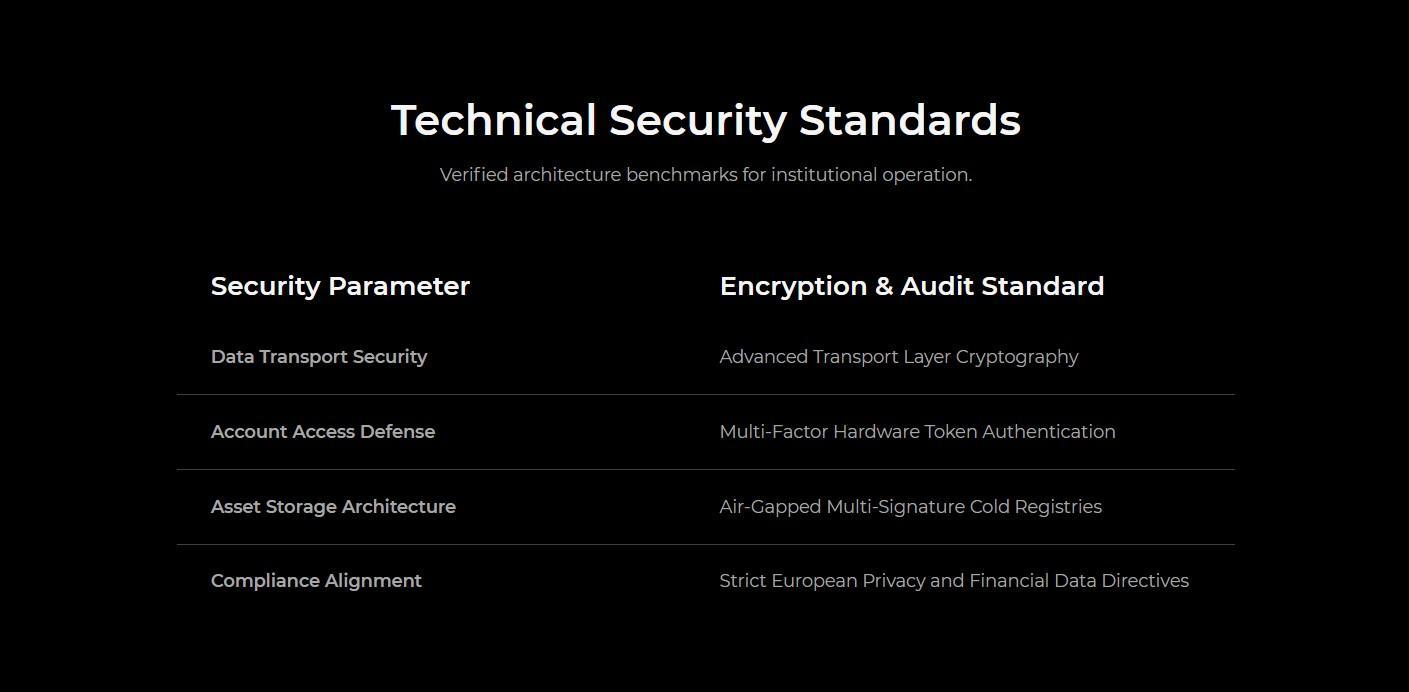
The Kepler Group security framework is not confined to static defences. It encompasses active crisis management as well. In the event of a severe macroeconomic shock, for instance, there is no need to wait for human intervention. The system's predictive AI is already at work, keeping a real-time tab on cross-border network synchronisation and global liquidity.
If those metrics fall outside safe limits, the system takes matters in hand: it isolates any exposed contract modules, reroutes orders to backup banking channels and secures value thresholds without delay.
As this Kepler-Group.ai Review has observed, for crypto holdings an automatic stop is put in place if price spikes go over 15% to stave off cascading losses seen in flash crashes. Kepler Group capital is held in a secure technical environment until interbank telemetry returns to normal.
Regulatory Compliance and KYC Standards
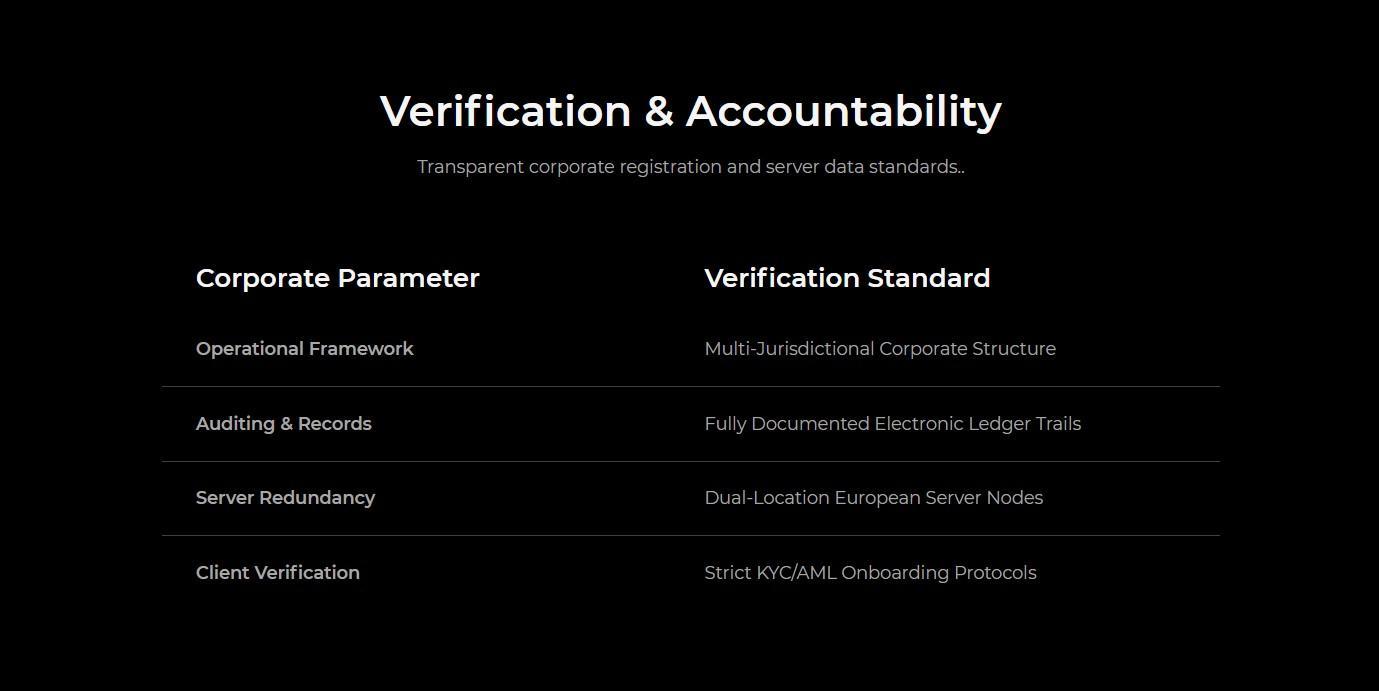
Registration on the platform is subject to rigorous AML and KYC protocols. The company's legal documentation, including the Client Agreement, Privacy Policy and Disclaimer, can be downloaded from the legal information page. The company aligns its practices with standardised risk declarations and European financial directives that span borders.
Compliance does not end once a client is on board. Under the watch of an assigned human broker, every systematic balance change or portfolio configuration is vetted to make sure it conforms with the Activation Plan the client has put in place.
There is also a dedicated Legal and Compliance division to see that all Swiss and broader European disclosure rules are met. This Kepler-Group.ai Review notes that these layers of compliance reinforce the overall Kepler Group security mandate.
Fees, Deposits, and Withdrawal Protocols
Access is determined by one of three Activation Plans. The Standard option comes in at EUR 250 and includes monthly reporting with standard routing. The Premium tier at EUR 5,000 brings bi-weekly certified audits and priority AI overrides. Those at the Institutional level (EUR 20,000) get executive committee oversight along with direct interbank clearing and auditable data in real time.
There are no hidden costs in the fee structure. Spreads are fixed for institutions, and there are no unlisted withdrawal commissions or maintenance premiums. Everything is laid out before activation, a detail consistent with the findings of this Kepler-Group.ai Review. Visa, Mastercard and Maestro are accepted, and withdrawals go straight to a verified European bank account via the dashboard.
The decision not to provide a demo account was made on the grounds that one cannot truly simulate Tier-1 market depth. Instead, a European account manager is on hand to guide clients through setup and strategy. A referral scheme is in effect too, offering 25% of re-deposits from new users, plus VIP access and commission rebates.
Pros and Cons of the Kepler Group Security Framework
This Kepler-Group.ai Review has turned up the following regarding the firm's infrastructure:
Pros: The 98% Kepler Group cold storage for crypto is a solid custodial measure. Data is shielded by AES-256 Kepler Group encryption and multi-factor hardware authentication to an institutional standard. Client funds are fully segregated in Tier-1 European banks, separate from the corporation's own health. Automated heuristics and volatility guardrails offer a proactive line of defence. KYC and AML protocols are enforced at onboarding with continuous compliance monitoring.
Cons: Some may find the proprietary platform an adjustment from what they are used to in MetaTrader. The most thorough audit reporting and tightest execution are the preserve of the top-tier plan.
Kepler-Group.ai Review: Final Security Assessment
In this Kepler-Group.ai Review, the Kepler Group security architecture has been found to be both layered and technically sound. Whether it is the algorithmic volatility locks, the hardware-isolated Kepler Group cold storage or the Kepler Group encryption that meets institutional benchmarks, the platform covers the bases for the safety-minded investor.
With its multi-layered design, there is no single point of failure to bring the whole thing down.
Add to that strict KYC and the presence of a human broker to oversee the management of Kepler Group capital, and the framework puts the guarantees of many retail firms to the test. For an investor in the European market who puts capital protection first, this is a technically robust proposition that deserves a closer look.